The next process, called the Hall-Herault process, uses a steel tank, lined with a refractory material with a second layer of carbon, which forms the cathode. The electric current is supplied by carbon electrodes whose lower ends are immersed in the solution obtained by Bayer’s process. These electrodes act as anodes. When a current of 8,000-20,000 amperes is switched on, the alumina, dissolved in the solution, separates from the oxygen and collects in a molten state at the bottom of the steel tank. Oxygen is liberated from carbon monoxide along with carbon and burns.
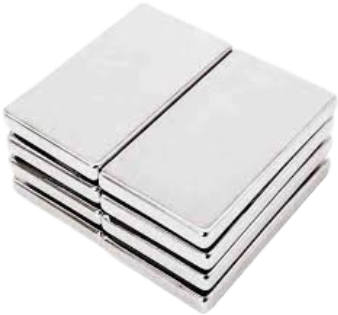
Pure aluminium is too soft for practical purposes. Hence, it is alloyed with copper, manganese, magnesium, zinc, silicon and nickel, which increases its tensile strength and hardness, while retaining the characteristics of lightness and durability. Aluminium is highly resistant to corrosion and is a very good conductor of heat and electricity. The commercial forms of aluminium are aluminium sheets, aluminium plates, aluminium foils, aluminium powder used as a pigment in the manufacture of paints, aluminium rods, aluminium bars and other aluminium structural parts.
Leave a Reply