In a gravity dam, stability is secured by making the embankment of such a size and shape that it will resist toe overturning, sliding and crushing. The dam will not overturn provided that the moment around the bend due to water pressure is smaller than the moment due to the weight of the dam. This is the case if the resultant force of water pressure and weight acts on the foundation of the dam. However, to prevent tensile stresses on the upstream face and excessive compressive stresses on the downstream face, the dam cross-section is usually designed so that the resulting cross-section is centered over all elevations. . For this type of dam, impermeable foundations with high bearing strength are essential.When situated on a suitable site, gravity dams can prove to be a better alternative to other types of dams. When built on a carefully studied foundation, the gravity dam probably represents the best-developed example of dam building. Since the fear of flood is a strong motivator in many regions, gravity dams are being built in some instances where an arch dam would have been more economical.
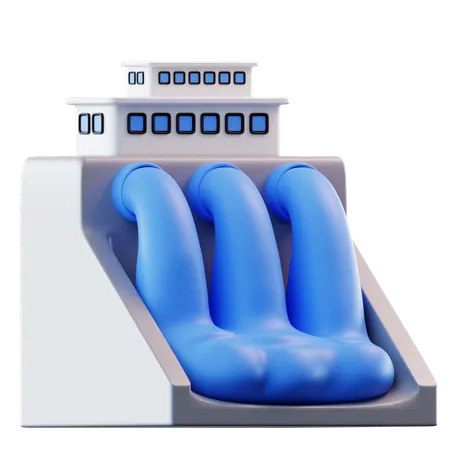
Gravity dams are classified as solid or hollow. The solid form is the more widely used of the two, although the hollow dam is frequently more economical to construct. Gravity dams can also be classified as overflow and non-overflow. A gravity dam can be combined with an arch dam, an arch-gravity dam, for areas with massive amounts of water flow but less material available for a purely gravity dam.
Leave a Reply